4 April 2010

Bible Chronicles Part 2 (Women in Church)

Happy Easter everyone!

I hope that you have enjoyed the festivities, recharged your batteries and are ready to face another one of....my blogs! This time I decided to continue with Part 2 of my examination of the Bible and my search for how true and honest its writings are. Again, I apologise for the length of the blog. This is mainly due to the fact that I have written specific paragraphs from the New Testament for those of you who do not have the actual book in hand.

In this part I will examine the role of women in Christian church in order to show that while at the time of Jesus and shortly after his crucifixion women played an equally important part in the early Christian church, all Christian orders afterward (whether Orthodox, Catholic, Protestant, etc) managed to portray women as subordinate to man and kept them out of the running of the church.


Much of the information I used on this particular blog has been obtained from the following books, which offer valuable information not only on the history of the early Christian movement but also on the history of the writings of the books of the New Testament:


  • 'Misquoting Jesus' by Bart D Ehrman
  • 'Text of the New Testament' by Bruce M. Metzger and Bart D. Ehrman

  • 'The Changing Faces of Jesus' by Geza Vermes
  • 'Lost Christianities' by Bart D Ehrman

Here we go then!


Modern scholars have come to recognise that disputes over the role of women in the early church occurred precisely because women had a role, often a significant and publicly high profile role. Moreover, this was the case from the very beginning, starting with the ministry of Jesus himself. It is true that Jesus’ closest followers, the 12 disciples, were all men, as would be expected of a Jewish teacher in 1st century Palestine. But our earliest Gospels indicate that Jesus was also accompanied by women on his travels, and that some of these women provided for him and his disciples financially, serving as patrons for his itinerant preaching ministry.


Mark
15:40 There were also women looking on afar off: among whom was Mary Magdalene, and Mary the mother of James the less and of Joses, and Salome;

15:41 (Who also, when he was in Galilee, followed him, and ministered unto him;) and many other women which came up with him unto Jerusalem.


Luke
8:1 And it came to pass afterward, that he went throughout every city and village, preaching and shewing the glad tidings of the kingdom of God: and the twelve were with him,

8:2 And certain women, which had been healed of evil spirits and infirmities, Mary called Magdalene, out of whom went seven devils,

8:3 And Joanna the wife of Chuza Herod's steward, and Susanna, and many others, which ministered unto him of their substance. 


We are also told that women accompanied Jesus during his final trip to Jerusalem, where they were present at his crucifixion and where they alone remained faithful to him at the end, when the male disciples had fled:


Matthew 
27:55 And many women were there beholding afar off, which followed Jesus from Galilee, ministering unto him:

27:56 Among which was Mary Magdalene, and Mary the mother of James and Joses, and the mother of Zebedees children.
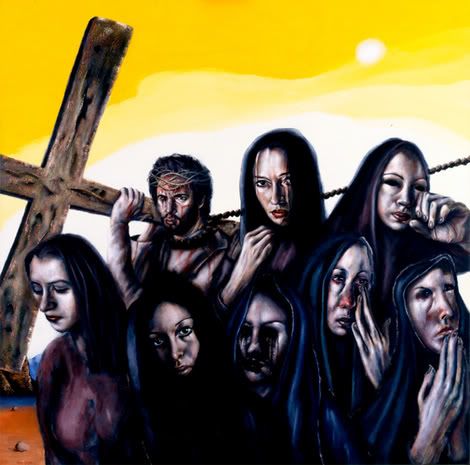


Most significant of all, each of our Gospels indicates that it was women – Mary Magdalene alone, or with several companions –who discovered Jesus' empty tomb and so were the first to know about and testify to Jesus’ resurrection from the dead.


We get a clear sense that women also played a major role in the early Christian churches. We can see this from the earliest Christian writer whose works have survived, the apostle Paul. The Pauline letters of the New Testament provide ample evidence that women held a prominent place in the emerging Christian communities from the earliest of times:


Romans
16:1 I commend unto you Phebe our sister, which is a servant [Note: It is interesting that King James Bible has used the word 'servant' when the old texts clearly stated 'deacon'. The term 'deacon' is also used in the modern greek versions of the New Testament] of the church which is at Cenchrea:

16:2 That ye receive her in the Lord, as becometh saints, and that ye assist her in whatsoever business she hath need of you: for she hath been a succourer of many, and of myself also.

16:3 Greet Priscilla and Aquila my helpers in Christ Jesus:

16:4 Who have for my life laid down their own necks: unto whom not only I give thanks, but also all the churches of the Gentiles.


16:6 Greet Mary, who bestowed much labour on us.

16:7 Salute Andronicus and Junia, my kinsmen, and my fellow-prisoners, who are of note among the apostles, who also were in Christ before me.


16:12 Salute Tryphena and Tryphosa, who labour in the Lord. Salute the beloved Persis, which laboured much in the Lord.

16:13 Salute Rufus chosen in the Lord, and his mother and mine.


Women in short appear to have played a significant role in the churches of Paul’s day. To some extend, this high profile was unusual in the Greco-Roman world. And it may have been rooted in Jesus’ proclamation that in the coming Kingdom there would be equality of men and women. This appears to have been Paul’s message as well:


Galatians
3:27 For as many of you as have been baptized into Christ have put on Christ.

3:28 There is neither Jew nor Greek, there is neither bond nor free, there is neither male nor female: for ye are all one in Christ Jesus.


Rather than being silent ‘hearers of the word’, women appear to have been actively involved in the weekly fellowship meetings, participating for example by praying and prophesying, much as the men did: 


1 Corinthians
11:5 But every woman that prayeth or prophesieth with her head uncovered dishonoureth her head: for that is even all one as if she were shaven.
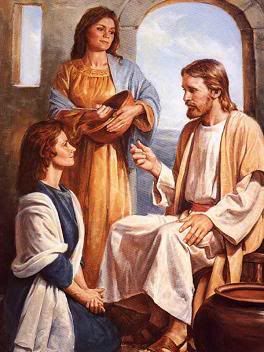


At the same time, to modern interpreters it may appear that Paul did not take his view of the relationship of men and women in Christ to what could be thought of as its logical conclusion.  He did require, for example, that when women prayed and prophesised in church they do so with their heads covered, to show they were ‘under authority’. In other words, Paul did not urge a social revolution in the relationship of men and women – just as he did not urge the abolition of slavery, even though he maintained that in Christ there “is neither slave nor free”. Instead he insisted that since “the time is short” until the coming of the Kingdom, everyone should be content with the roles they had been given, and that no one should seek to change their status: 


1 Corinthians
7:17 But as God hath distributed to every man, as the Lord hath called every one, so let him walk. And so ordain I in all churches.

7:18 Is any man called being circumcised? let him not become uncircumcised. Is any called in uncircumcision? let him not be circumcised.

7:19 Circumcision is nothing, and uncircumcision is nothing, but the keeping of the commandments of God.

7:20 Let every man abide in the same calling wherein he was called.

7:21 Art thou called being a servant? care not for it: but if thou mayest be made free, use it rather.

7:22 For he that is called in the Lord, being a servant, is the Lord's freeman: likewise also he that is called, being free, is Christ's servant.

7:23 Ye are bought with a price; be not ye the servants of men.

7:24 Brethren, let every man, wherein he is called, therein abide with God.


At best then, this can be seen as an ambivalent attitude toward the role of women: they were equal in Christ and were allowed to participate in the life of the community, but as women, not as men (they were, for example, not to remove their veils and so appear as men). This ambivalence on Paul’s part had an interesting effect on the role of women in the churches after his day. In some churches it was the equality in Christ that was emphasized; in others it was the need for women to remain subservient to men. And so in some churches women played very important, leadership roles; in others, their roles were diminished and their voices quieted. Reading later documents associated with Paul’s churches, after his death, we can see that disputes arose about the roles women should play; eventually there came an effort to suppress the role of women in the churches altogether.


This becomes evident in a letter that was written in Paul’s name. Scholars today are by and large convinced that 1 Timothy was not written by Paul but by one of his later, second generation followers. Here, in one of the famous passages dealing with women in the New Testament, we are told that women must not be allowed to teach men because they were created inferior, as indicated by God himself in the Law:


1 Timothy
2:11 Let the woman learn in silence with all subjection.

2:12 But I suffer not a woman to teach, nor to usurp authority over the man, but to be in silence.

2:13 For Adam was first formed, then Eve.

2:14 And Adam was not deceived, but the woman being deceived was in the transgression.

2:15 Notwithstanding she shall be saved in childbearing, if they continue in faith and charity and holiness with sobriety.


This seems a long way from Paul’s view that in Christ there is not male and female. The scribes who were copying the texts that later became scriptures obviously were involved in the debates of the Christian communities, regarding the role of women in the church. And on occasion the debates made an impact on the text being copied, as passages were changed to reflect the views of the scribes who were reproducing them. In almost every instance in which a change of this sort occurs, the text is changed in order to limit the role of women and to minimise their importance to the Christian movement. 

 
If this sounds a bit far fetched, let's see a few examples of textual alterations regarding the role of women in church. 


One of the most important passages in the contemporary discussion of the role of women in the church is found in 1 Corinthians:


1 Corinthians
14:33 For God is not the author of confusion, but of peace, as in all churches of the saints.

14:34 Let your women keep silence in the churches: for it is not permitted unto them to speak; but they are commanded to be under obedience as also saith the law.

14:35 And if they will learn any thing, let them ask their husbands at home: for it is a shame for women to speak in the church.

14:36 What? came the word of God out from you? or came it unto you only?


The passage appears to be a clear and straightforward injunction for women not to speak, let alone teach, in the church. Although most scholars are convinced that Paul did not write 1 Timothy, no one doubts that Paul wrote 1 Corinthians. But there are doubts about this passage. As it turns out, the verses in question (34-35) are shuffled around in some of our important textual witnesses. In 3 Greek manuscripts and a couple of Latin ones, they are found not here, after verse 33, but later, after verse 40. This has led some scholars to surmise that the verses were not written by Paul but originated as a kind of marginal note added by a scribe, possibly under the influence of 1 Timothy. The note was then inserted in different places of the text by various scribes.


There are good reasons for thinking that Paul did not originally write these verses. For one thing, they do not fit well into their immediate context. In this part of 1 Corinthians 14, Paul is addressing the issue of prophecy in the church and giving instructions to Christian prophets concerning how they are to behave during the Christian services of worship. This is the theme of verses 26-33 and it is the theme again of verses 36-40. If one removes verses 34-35 from their context, the passage seems to flow seamlessly as a discussion of the role of Christian prophets. The discussion of women appears as intrusive in its immediate context, breaking into instructions that Paul is giving about a different matter.


Another textual alteration seems to occur in a passage in Romans 16, in which Paul speaks of a woman, Junia, and a man who was presumably her husband, Andronicus, both of whom he calls “foremost among the apostles”: 


Romans
16:7 Salute Andronicus and Junia, my kinsmen, and my fellow-prisoners, who are of note among the apostles, who also were in Christ before me.


This is a significant verse, because it is the only place in the New Testament in which a woman is referred to as an apostle. Interpreters have been so impressed by the passage that a large number of them have insisted that it cannot mean what is says, and so have translated the verse as referring not to a woman but to a man named Junias. The problem with this translation is that whereas Junia was a common name for a woman, there is no evidence in the ancient world for Junias as a man’s name. Paul is referring to a woman named Junia, even though in some modern English Bibles translators continue to refer to this female apostle as if she was a man named Junias.


In some of our manuscripts, rather than saying “Greet Andronicus and Junia, my relatives and fellow prisoners, who are foremost among the apostles”, the text now changed so as to be more readily translated “Greet Andronicus and Junia, my relatives; and also greet my fellow prisoners who are foremost among the apostles”. With this textual change, no longer does one need to worry about a woman being cited among the apostolic band of men.
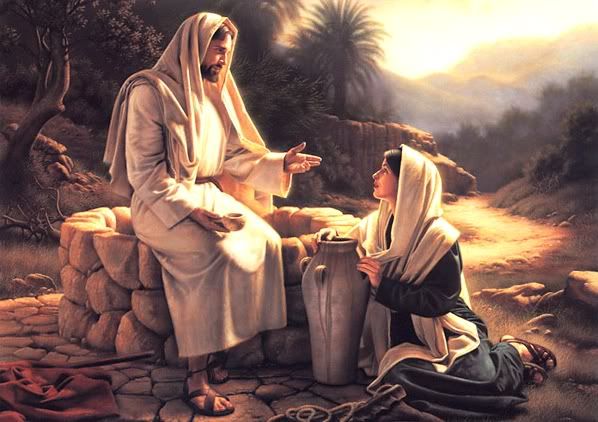


A similar change was made by some scribes who copied the book of Acts . In chapter 17 we learn that Paul and his missionary companion Silas spent time in Thessalonica preaching the gospel of Christ to the Jews of the local synagogue:


Acts
17:4 And some of them believed, and consorted with Paul and Silas; and of the devout Greeks a great multitude, and of the chief women not a few.


The idea of women being prominent, let alone prominent converts, was too much for some scribes and so the text came to be changed in some manuscripts so that now we are told  “…along with a large number of wives of prominent men”


Finally, I will present to you the most misrepresented figure in all of Christian faith, that of Mary Magdalene. For some reason, until a few years ago,  the Christian Church and especially the Catholic Church portrayed Mary Magdalene as a prostitute which Jesus forgave and from then on she followed him. In fact, many paintings throughout the centuries depicted Mary as a weeping sinner washing Jesus' feet with her hair, as the one below.
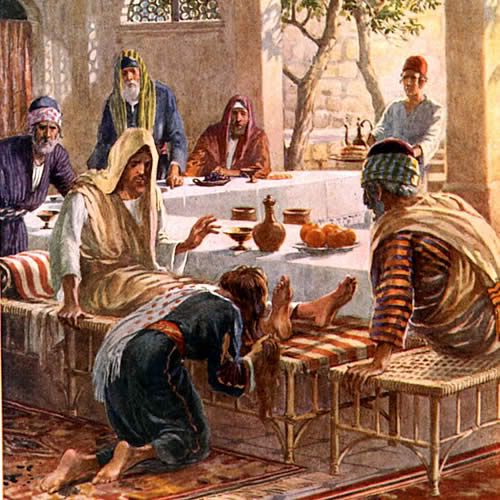


However, when we examine the New Testament we see clearly that not only Mary was not the prostitute in one of the stories, but in fact was considered one of Jesus' most trusted friends and followers. 


We start first with Mark and the episode of the woman washing Jesus' feet:


Mark
14:3 And being in Bethany in the house of Simon the leper, as he sat at meat, there came a woman having an alabaster box of ointment of spikenard very precious; and she brake the box, and poured it on his head.

14:4 And there were some that had indignation within themselves, and said, Why was this waste of the ointment made?

14:5 For it might have been sold for more than three hundred pence, and have been given to the poor. And they murmured against her.

14:6 And Jesus said, Let her alone; why trouble ye her? she hath wrought a good work on me.

14:7 For ye have the poor with you always, and whensoever ye will ye may do them good: but me ye have not always.

14:8 She hath done what she could: she is come aforehand to anoint my body to the burying.

14:9 Verily I say unto you, Wheresoever this gospel shall be preached throughout the whole world, this also that she hath done shall be spoken of for a memorial of her.


You will note that Mark does not state that the woman was a prostitute or that her name was Mary Magdalene. Matthew also tells a similar story:


Matthew
26:6 Now when Jesus was in Bethany, in the house of Simon the leper,

26:7 There came unto him a woman having an alabaster box of very precious ointment, and poured it on his head, as he sat at meat.

26:8 But when his disciples saw it, they had indignation, saying, To what purpose is this waste?

26:9 For this ointment might have been sold for much, and given to the poor.

26:10 When Jesus understood it, he said unto them, Why trouble ye the woman? for she hath wrought a good work upon me.

26:11 For ye have the poor always with you; but me ye have not always.

26:12 For in that she hath poured this ointment on my body, she did it for my burial.

26:13 Verily I say unto you, Wheresoever this gospel shall be preached in the whole world, there shall also this, that this woman hath done, be told for a memorial of her.


Again no mention of Mary or a prostitute. John, on the other hand, identifies the woman as Mary, the sister of Lazarus (and therefore not Magdalene) but again no sign of a prostitute:


John
12:1 Then Jesus six days before the passover came to Bethany, where Lazarus was, which had been dead, whom he raised from the dead.

12:2 There they made him a supper; and Martha served: but Lazarus was one of them that sat at the table with him.

12:3 Then took Mary a pound of ointment of spikenard, very costly, and anointed the feet of Jesus, and wiped his feet with her hair: and the house was filled with the odour of the ointment.

12:4 Then saith one of his disciples, Judas Iscariot, Simon's son, which should betray him, 


The only Gospel which identifies the woman as being a prostitute (but again no Mary Magdalene or any other Mary) was that of Luke:


Luke
7:36 And one of the Pharisees desired him that he would eat with him. And he went into the Pharisee's house, and sat down to meat.

7:37 And, behold, a woman in the city, which was a sinner, when she knew that Jesus sat at meat in the Pharisee's house, brought an alabaster box of ointment,

7:38 And stood at his feet behind him weeping, and began to wash his feet with tears, and did wipe them with the hairs of her head, and kissed his feet, and anointed them with the ointment.


So, if Mary Magdalene was not a prostitute or the woman that washed Jesus' feet with her hair, who was she? What does the New Testament say about her? We are first introduced to Mary Magdalene in Luke's Gospel where we learn that she was cured of evil spirits by Jesus, meaning that she was cured from some kind of illness:


Luke
8:1 And it came to pass afterward, that he went throughout every city and village, preaching and shewing the glad tidings of the kingdom of God: and the twelve were with him,

8:2 And certain women, which had been healed of evil spirits and infirmities, Mary called Magdalene, out of whom went seven devils,


It seems that what happened was this. Luke stated that the woman washing the feet of Jesus was a prostitute ( a sinner). He has also stated that Mary Magdalene had been cured by Jesus. John in his Gospel said that the woman's name was Mary. So, the church, amalgamated everything together to come to this soup of pure fabrication.


I also know that some of you would say that Maria Magdalene is referred to as a prostitute in another story in the Bible, where the Jews wanted to stone a sinner to death. As you can see from the story below, no name is given to that woman:


John
8:1 Jesus went unto the mount of Olives.

8:2 And early in the morning he came again into the temple, and all the people came unto him; and he sat down, and taught them.

8:3 And the scribes and Pharisees brought unto him a woman taken in adultery; and when they had set her in the midst,

8:4 They say unto him, Master, this woman was taken in adultery, in the very act.

8:5 Now Moses in the law commanded us, that such should be stoned: but what sayest thou?

8:6 This they said, tempting him, that they might have to accuse him. But Jesus stooped down, and with his finger wrote on the ground, as though he heard them not.

8:7 So when they continued asking him, he lifted up himself, and said unto them, He that is without sin among you, let him first cast a stone at her.

8:8 And again he stooped down, and wrote on the ground.

8:9 And they which heard it, being convicted by their own conscience, went out one by one, beginning at the eldest, even unto the last: and Jesus was left alone, and the woman standing in the midst.

8:10 When Jesus had lifted up himself, and saw none but the woman, he said unto her, Woman, where are those thine accusers? hath no man condemned thee?

8:11 She said, No man, Lord. And Jesus said unto her, Neither do I condemn thee: go, and sin no more.


From then on all the Gospels agree that Mary Magdalene was present to all of Jesus' final moments and was one of the women that learned about his resurrection first, before even any of the disciples.


At least, when it comes to Mary Magdalene, the church has aknowleddged its error and, in fact, Mary Magdalene is now considered a saint in the Catholic, Greek Orthodox and Anglican orders. 
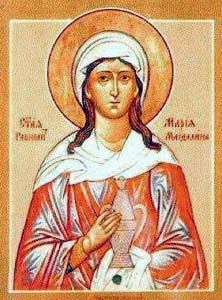


It is evident that all these years the church fathers have manipulated the scriptures in order to limit the role of women in church. In fact, the Greek Orthodox church still does not allow women to become priests. This, as I showed, is against what Jesus did when alive and what the apostles taught. So much for the church fathers following the word of God to the letter, eh? It makes you think how many other teachings have been changed or manipulated to suit the big business called 'church'.


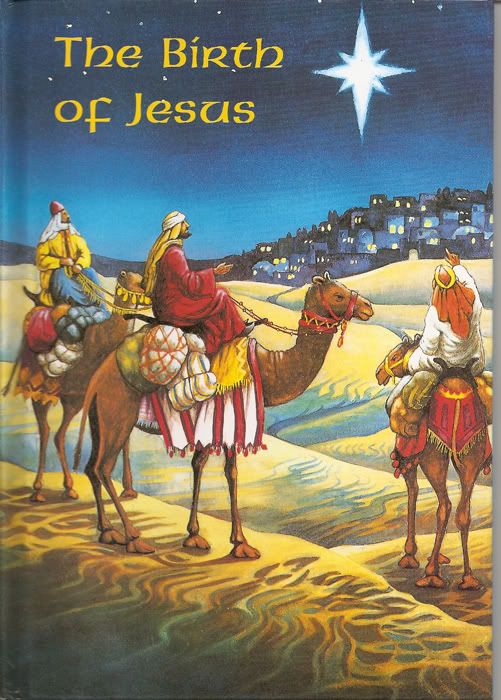
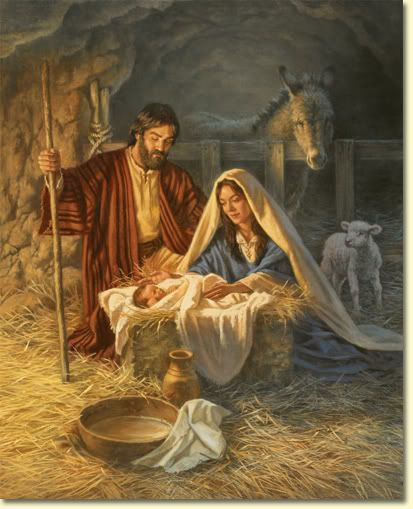


Χρονικα Της Βιβλου Μερος 1: Η γεννηση του Ιησου. Τι ειναι αληθεια και τι δεν ειναι.

Αυτη τη βδομαδα θα αρχισω να γραφω ενα θεμα σχετικα με τη θρησκεια και συγκεκριμενα μια
σειρα θεματων απο τη Βιβλο και ειδικα απο την Καινη Διαθηκη. Μια που οι Χριστιανοι πιστευουν οτι η Βιβλος περιεχει τη διδασκαλια του Θεου, οπως μεταφερθηκε απο τους Αποστολους, πρεπει να εξετασουμε τη Βιβλο για να δουμε τι ακριβως μας λεει.


Επειδη ο υπολογιστης μου δεν εχει δυνατοτητα αυτοματης διορθωσης λαθων στην ελληνικη γλωσσα, σας ζηταω απο τωρα συγγνωμη για τυχων τυπογραφικα λαθη.


Να θυμαστε οτι σε αυτο το κειμενο θα κανω απλα αναφορες σε μερικα σημεια της Βιβλου τα οποια μου εχουν κινησει την περιεργεια. Δεν θα προσπαθησω να σας υποχρεωσω να δεχτειτε τις αποψεις μου, απλα θα σας αφησω να απαντησετε μεσα σας τις δικες σας ερωτησεις.


Αυτο που θα ηθελα να δω ομως ειναι μερικους απο σας να προσπαθησουν να εξηγησουν την αποψη τους πανω στο θεμα.


Σε αυτο το κειμενο αλλα και στα μελλοντικα πανω στο ιδιο θεμα εχω χρησιμοποιησει 2 διαφορετικες εκδοσεις της Καινης Διαθηκης.  Η πρωτη ειναι γραμμενη στα αρχαια ελληνικα, η οποια ηταν και η πρωτη γλωσσα με την οποια γραφτηκαν τα βιβλια της Καινης Διαθηκης. Τη συγκεκρημενη εκδοση την κατεβασα απο την ιστοσελιδα της Αποστολικης Διακονιας της Εκκλησιας της Ελλαδας, οποτε δε μπορω να κατηγορηθω οτι χρησιμοποιησα εκδοση απο καμμια αιρεση. Η δευτερη εκδοση, την οποια και χρησιμοποιω και πιο συχνα, ειναι γραμμενη σε μοντερνα ελληνικα και ειναι η εκδοση που μπορουμε να αγορασουμε σε ολα τα βιβλιοπωλεια.


Ας ξεκινησω λοιπον το θεμα του σημερινου κειμενου:


Και χωρις να εχουμε διαβασει τη Βιβλο, ολοι μας εχουμε μια ιδεα για το πως και που γεννηθηκε ο Ιησους, απο οσα εχουμε δει στην τηλεοραση και εχουμε διδαχθει στο σχολειο. Μαθαμε οτι η Μαρια και ο Ιωσηφ επρεπε να ταξιδεψουν στη Βηθλεεμ λογω μιας απογραφης που διαταχθηκε απο τους Ρωμαιους, οτι δεν βρηκαν μερος να μεινουν και αναγκαστηκαν να βρουν ενα σταβλο, στον οποιο και γεννηθηκε ο Ιησους. Ενα λαμπερο αστρο οδηγησε τους Τρεις Μαγους στο σημειο της γεννησης, οπου αγγελοι και βοσκοι ειχαν συγκεντρωθει, ενω ο βασιλιας Ηρωδης μαθαινοντας οτι ενας μελλοντικος βασιλιας γεννηθηκε, εδωσε διαταγη να θανατωθουν ολα τα αρσενικα μωρα κατω των 2 ετων.


Ας δουμε ομως πως ο Μαρκος, ο Ματθαιος, ο Λουκαςκαι ο Ιωαννης περιγραφουν τη γεννηση του Ιησου στην Καινη Διαθηκη.


Κατ αρχην, ουτε ο Μαρκος ουτε ο Ιωαννης κανουν καμμια αναφορα στα ευαγγελια τους. Δεν αναφερουν τη γεννηση πουθενα. Μονο ο Ματθαιος και ο Λουκας την περιγραφουν, αλλα με αντιφατικες πληροφοριες.

Ματθαιος 2
1Aφού λοιπόν γεννήθηκε ο Iησούς Xριστός στη Bηθλεέμ της Iουδαίας, στις μέρες του βασιλιά Hρώδη, κατέφτασαν στα Iεροσόλυμα σοφοί από την Aνατολή, 

2ρωτώντας: πού είναι ο νεογέννητος βασιλιάς των Iουδαίων; Γιατί είδαμε το άστρο του στην Aνατολή και ήρθαμε να τον προσκυνήσουμε 

3Aλλα ο βασιλιάς Hρώδης ταράχτηκε, όταν το άκουσε αυτό, και μαζί του όλη η πόλη των Iεροσολύμων! 

4Έτσι, συγκέντρωσε όλους τους αρχιερείς και τους δασκάλους του λαού και ρωτούσε να μάθει απ' αυτούς πού είναι καθορισμένο να γεννηθεί ο Xριστός. 

5Kι εκείνοι του είπαν: Στη Bηθλεέμ της Iουδαίας, γιατί έτσι έχει γραφτεί από τον προφήτη: 

6Kι εσύ Bηθλεέμ, περιοχή του Iούδα, δεν είσαι καθόλου ασήμαντη ανάμεσα στις επιφανέστερες πόλεις του Iούδα, γιατί από σένα θα βγει αρχηγός, που θα καθοδηγήσει το λαό μου, τον Iσραήλ
 
7Tότε ο Hρώδης, αφού κάλεσε κρυφά τους σοφούς, εξακρίβωσε απ' αυτούς τον καιρό που είχε φανεί το άστρο. 

8Kατόπιν τους έστειλε στη Bηθλεέμ λέγοντάς τους: Πηγαίνετε και ψάξτε προσεκτικά για το παιδί κι όταν το βρείτε να μου το πείτε, για να έρθω κι εγώ να το προσκυνήσω

9Eκείνοι, αφού άκουσαν το βασιλιά, αναχώρησαν. Kαι φάνηκε πάλι το αστέρι που είδαν στην Aνατολή, το οποίο προχωρούσε μπροστά τους καθοδηγώντας τους, μέχρι που ήρθε και στάθηκε πάνω εκεί που ήταν το παιδί. 

10Kαι σαν είδαν το αστέρι, ένιωσαν χαρά πάρα πολύ μεγάλη. 

11Kι όταν έφτασαν στο σπίτι, είδαν το παιδί μαζί με τη Mαρία, τη μητέρα του, κι έπεσαν και το προσκύνησαν. Kατόπιν άνοιξαν τους θησαυρούς τους και του πρόσφεραν δώρα: χρυσό και λιβάνι και σμύρνα. 

12Kι επειδή με θεία αποκάλυψη φωτίστηκαν στ'όνειρό τους να μην επιστρέψουν στον Hρώδη, αναχώρησαν για τη χώρα τους από άλλο δρόμο.

13Όταν αυτοί αναχώρησαν, εμφανίστηκε ένας άγγελος του Kυρίου στον Iωσήφ, στ'όνειρό του, και του είπε: Σήκω, πάρε μαζί σου το παιδί και τη μητέρα του και φύγε στην Aίγυπτο και μείνε εκεί ώσπου να σε ειδοποιήσω, γιατί ο Hρώδης πρόκειται να αναζητήσει το παιδί με σκοπό να το σκοτώσει 

14Σηκώθηκε τότε εκείνος, πήρε το παιδί και τη μητέρα του μέσα στη νύχτα και αναχώρησε στην Aίγυπτο, 

15όπου κι έμεινε ως το θάνατο του Hρώδη, έτσι που να εκπληρωθεί αυτό που είχε πει ο Kύριος μέσω του προφήτη: 'Από την Aίγυπτο κάλεσα το Γιο μου'

16Tότε ο Hρώδης, σαν είδε πως εξαπατήθηκε από τους σοφούς, θύμωσε πάρα πολύ κι έστειλε και σκότωσε όλα τα παιδιά μέσα στη Bηθλεέμ και σ'όλη την περιφέρειά της από δύο χρόνων και κάτω, σύμφωνα με το χρόνο που εξακρίβωσε από τους σοφούς. 

17Tότε εκπληρώθηκε η προφητεία του Iερεμία, του προφήτη που λέει: 

18Φωνή ακούστηκε στη Pαμά, θρήνος και κλάμα και οδυρμός πολύς. Ήταν η Pαχήλ που έκλαιγε για τα παιδιά της και δεν ήθελε να παρηγορηθεί, γιατί δε ζούσαν πια.


Ας δουμε τωρα τη λεει ο Λουκας:

Λουκας 2
1Tις μέρες εκείνες βγήκε διάταγμα από τον Kαίσαρα Aύγουστο να γίνει απογραφή σε όλη την οικουμένη. 

2Aυτή ήταν η πρώτη απογραφή που έγινε, όταν κυβερνήτης της Συρίας ήταν ο Kυρήνιος. 

3Έτσι, πήγαιναν όλοι να απογραφούν, ο καθένας στη δική του πόλη. 

4Aνέβηκε, λοιπόν, και ο Iωσήφ από τη Γαλιλαία, από την πόλη Nαζαρέτ, σε μια πόλη του Δαβίδ, στην Iουδαία, που ονομάζεται Bηθλεέμ - γιατί καταγόταν από το γένος και την οικογένεια του Δαβίδ - 

5για να απογραφεί μαζί με τη Mαριάμ, την κοπέλα που ήταν αρραβωνιασμένη μαζί του και η οποία ήταν έγκυος. 

6Kι ενώ βρισκόταν εκεί, συμπληρώθηκαν οι μέρες της να γεννήσει. 

7Γέννησε, λοιπόν, το γιο της τον πρωτότοκο και τον σπαργάνωσε και τον ξάπλωσε στη φάτνη, γιατί δεν υπήρχε τόπος γι' αυτούς στο πανδοχείο.

8Στην ίδια εκείνη περιοχή υπήρχαν και μερικοί βοσκοί που διανυκτέρευαν στην ύπαιθρο και φύλαγαν βάρδιες στο κοπάδι τους. 

9Kαι να! Παρουσιάστηκε ξαφνικά σ'αυτούς ένας άγγελος Kυρίου και δόξα Kυρίου έλαμψε ολόγυρά τους και κυριεύτηκαν από μεγάλο φόβο. 

10Mα ο άγγελος τους είπε: Μη φοβάστε, γιατί σας φέρνω τώρα το καλό άγγελμα μεγάλης χαράς για όλο το λαό: 

11Ότι σήμερα γεννήθηκε στην πόλη του Δαβίδ Σωτήρας για σας, που είναι ο Xριστός, ο Kύριος. 

12Kαι το σημάδι αναγνώρισής του για σας είναι τούτο: Θά βρείτε ένα σπαργανωμένο βρέφος, ξαπλωμένο μέσα σε μια φάτνη 

13Ξαφνικά τότε, ο άγγελος πλαισιώθηκε από πλήθος αγγελικής στρατιάς, που υμνούσαν το Θεό κι έλεγαν: 

14Δόξα στον Ύψιστο Θεό και στη γη ειρήνη, εκδήλωση εύνοιας στους ανθρώπους

15Kι αμέσως μόλις τους άφησαν οι άγγελοι κι έφυγαν στον ουρανό, είπαν οι βοσκοί μεταξύ τους: Ας ξεκινήσουμε τώρα κιόλας ως τη Bηθλεέμ να δούμε το γεγονός αυτό που πληροφορηθήκαμε και που μας το έκανε γνωστό ο Kύριος 

16Ήρθαν, λοιπόν, τρέχοντας και βρήκαν τη Mαριάμ και τον Iωσήφ, καθώς και το βρέφος ξαπλωμένο στη φάτνη. 

17Kαι μόλις τους είδαν τους διηγήθηκαν λεπτομερώς την πληροφορία που τους είπε ο άγγελος για το παιδί αυτό. 

18Kι όλοι όσοι τους άκουσαν, απόρησαν για όσα τους είπαν οι βοσκοί. 

19H Mαριάμ όμως φύλαγε όλα αυτά τα λόγια μέσα στην καρδιά της και τα συλλογιζόταν. 

20Επέστρεψαν κατόπιν οι βοσκοί δοξάζοντας και υμνώντας το Θεό για όλα όσα άκουσαν και είδαν, όπως ακριβώς είχε ειπωθεί σ' αυτούς.

21Kι όταν συμπληρώθηκαν οι οχτώ μέρες που απαιτούνταν για να περιτμηθεί το παιδί, τον ονόμασαν Iησού, όπως είχε ονομαστεί από τον άγγελο προτού συλληφθεί στη μήτρα.

22Όταν, επίσης, συμπληρώθηκαν οι μέρες για τον καθαρισμό τους - σύμφωνα με το μωσαϊκό νόμο - τον πήγαν στα Iεροσόλυμα για να τον αφιερώσουν στον Kύριο, 

23(όπως είναι γραμμένο στο νόμο του Kυρίου, ότι κάθε αρσενικό που πρωτοανοίγει μήτρα, άγιο θα θεωρηθεί για τον Kύριο 

24και για να προσφέρουν θυσία ένα ζευγάρι τρυγόνια ή δύο νεογέννητα περιστέρια όπως απαιτεί ο νόμος του Kυρίου.
 
25Eκείνη ακριβώς την εποχή υπήρχε στα Iεροσόλυμα ένας άνθρωπος που λεγόταν Συμεών. Kι ο άνθρωπος αυτός ήταν δίκαιος και ευσεβής, που προσδοκούσε την παρηγοριά του Iσραήλ και το Πνεύμα το ’γιο ήταν επάνω του. 

26Σ'αυτόν, λοιπόν, είχε αποκαλυφθεί από το ’γιο Πνεύμα ότι δε θα πεθάνει πριν δει τον Xριστό του Kυρίου. 

27Έτσι, με την καθοδήγηση του Πνεύματος, ήρθε στο ναό, και μόλις οι γονείς έφεραν μέσα το παιδάκι, τον Iησού, για να κάνουν γ' αυτόν ό,τι συνηθίζεται σύμφωνα με το νόμο, 

28το πήρε στην αγκαλιά του και δοξολόγησε το Θεό και είπε: 

29Τώρα πια αξιώνεις το δούλο σου, Kύριε, να πεθάνει ειρηνικά, σύμφωνα με την υπόσχεσή σου. 

30Γιατί τα μάτια μου είδαν το μέσο της σωτηρίας σου 

31που ετοίμασες κατάντικρυ όλων των λαών. 

32Φως που θ' αποτελέσει αποκάλυψη για τα έθνη και δόξα για το λαό σου τον Iσραήλ
 
33Kι απορούσαν ο Iωσήφ και η μητέρα του παιδιού γι' αυτά που λέγονταν γι'αυτό. 

34Aκόμα, ο Συμεών τους ευλόγησε και είπε στη Mαριάμ, τη μητέρα του παιδιού: Aυτός είναι προορισμένος να γίνει η αιτία για την πτώση ή την ανόρθωση πολλών στο Iσραήλ και σημείο αντιλεγόμενο. 

35Mάλιστα, ακόμα και τη δική σου προσωπικά την ψυχή ρομφαία θα τη διαπεράσει, έτσι που ν' αποκαλυφτούν οι διαλογισμοί πολλών καρδιών
.
.
.
39Kι όταν τέλειωσαν όλα εκείνα που ήταν καθορισμένα να κάνουν σύμφωνα με το νόμο του Kυρίου, επέστρεψαν στην πόλη τους τη Nαζαρέτ στη Γαλιλαία.

40Στο μεταξύ, το παιδί μεγάλωνε και δυνάμωνε στο πνεύμα και γέμιζε με σοφία, ενώ το κάλυπτε η χάρη του Θεού.

41Kαι κάθε χρόνο, κατά τη γιορτή του Πάσχα, οι γονείς του πήγαιναν στην Iερουσαλήμ.  

42Όταν, λοιπόν, έγινε δώδεκα χρόνων, ανέβηκαν στα Iεροσόλυμα, όπως το συνήθιζαν στη γιορτή.


Ζηταω συγγνωμη για ολο το παραπανω κατεβατο αλλα επρεπε να το βαλω εδω για οσους δεν εχουν τη δυνατοτητα να εχουν την Καινη Διαθηκη μπροστα τους.


Ιστορικα, ειναι αδυνατον τα γεγονοτα σε αυτες τις δυο ιστοριες να εγιναν την ιδια χρονικη περιοδο, εστω και αν αυτο εχουμε διδαχθει τοσα χρονια.


Ο Λουκας τοποθετει τη γεννηση του Ιησου κατα την περιοδο που ο Κυρηνιος ηταν κυβερνητης της Συριας. Αυτο ηταν γυρω στο 6-7μχ και αναφορα στην απογραφη εχει γινει απο τον ιστορικο του 1ου αιωνα Ιωσηπο (Josephus). Αλλα θα ηταν αδυνατο για τον Ηρωδη να ζουσε την ιδια αυτη περιοδο, μια που ο Ηρωδης πεθανε το 4πχ. Για οσους αμφιβαλουν την ημερομηνια θανατου του Ηρωδη, μπορειτε να διαβασετε τα παρακατω:


  • Ormond Edwards, “Herodian Chronology,” Palestine Exploration Quarterly 114 (1982) 29-42

  • W.E. Filmer, “Chronology of the Reign of Herod the Great,” Journal of Theological Studies ns 17 (1966) 283-298

  • Paul Keresztes, Imperial Rome and the Christians: From Herod the Great to About 200 A.D. (Lanham, MD: University Press of America, 1989) 1-43

  • P. M. Bernegger, “Affirmation of Herod’s Death in 4 B.C.,” Journal of Theological Studies ns 34 (1983), 526-31


Επισης, η λιστα με ολους τους κυβερνητες κατα την περιοδο βασιλειας του Ηρωδη ειναι γνωστη και κανενας Κυρηνιος δεν αναφερεται, στην περιπτωση που νομιζατε οτι ο Κυρηνιος κυβερνησε νωριτερα απο το 6 μχ.


Επισης, η απογραφη διαταχθηκε απο τον Καισαρα Αυγουστο αλλα δεν εγινε την περιοδο της γεννησης. Οντος ο Καισαρας Αυγουστος διεταξε απογραφες, οπως λεει και ο Λουκας. Ο Καισαρας Αυγουστος ηταν αυτοκρατορας της Ρωμαικης Αυτοκρατοριας απο το 27 πχ ως το 14 μχ. Ενεκρινε 3 απογραφες κατα τη διαρκεια της βασιλειας του. Πως το ξερουμε αυτο? Οι τρεις απογραφες αναφερονται στις Πραξεις του Αυγουστου, μια λιστα η οποια ανεφερε τα 35 μεγαλυτερα κατορθωματα του. Ηταν τοσο περηφανος για τις απογραφες αυτες, που τις εβαλε ογδοες στη λιστα. Οι πραξεις του Αυγουστου τοποθετηθηκαν σε δυο μπρουτζινες τιμητικες πλακες, εξω απο το μασωλειο του μετα το θανατο του.


Οι 3 απογραφες αυτες εγιναν το 28πχ, 8πχ και 14μχ. Αρα απογραφη την περιοδο του Κυρηνιου θα ηταν μονο αυτη το 14μχ, πολυ αργοτερα απο την γεννηση.


Αρα, ειναι αδυνατον τα γεγονοτα που περιγραφει ο Ματθαιος να εγιναν την ιδια περιοδο με τα γεγονοτα που περιγραφει ο Λουκας, μια που τα γεγονοτα στο Ματθαιο εγιναν οταν ο Ηρωδης ζουσε, ενω τα γεγονοτα στο Λουκα εγιναν 10 χρονια αργοτερα.


Κι εδω ειναι το προβλημα. Ποια απο τις δυο ιστοριες ειναι αληθινη? Ο Ματθαιος τοποθετει τη γεννηση του Ιησου κατα τη διαρκεια της βασιλειας του Ηρωδη, αλλα δεν κανει καμμια αναφορα σε γεννηση σε σταβλο, για αγγελους και βοσκους. Μαλιστα, ο Ματθαιος αναφερει οτι η οικογενεια του Ιησου ζουσε στη Βηθλεεμ, μια που οι μαγοι επισκευθηκαν το μωρο στο σπιτι του και μετα η οικογενεια μετακομισε στην Αιγυπτο για να αποφυγει τους αντρες του Ηρωδη.


Απο την αλλη, ο Λουκας τοποθετει την γεννηση 10 χρονια αργοτερα, αλλα δεν κανει καμμια αναφορα για διαταγη να σκοτωθουν βρεφη. Μαλιστα, αναφερει οτι ο Ιησους και η οικογενεια του εμειναν στη Ναζαρεθ μεχρι που ο Ιησους εγινε 12 ετων.


Δε μπορουμε να πουμε οτι η αληθινη εκθοχη ειναι αυτη που διδαχθηκαμε (δηλαδη μια ενωση των δυο ιστοριων μαζι), μια που η ενωση δυο διαφορετικων αναφορων δεν αποτελει δημιουργεια μιας σωστης και εγκυρης ιστοριας. Δε μπορουμε να δεχθουμε οτι τα γεγονοτα που περιγραφονται και στις δυο ιστοριες ειναι αληθινα, αλλα να αποριψουμε τις ιστορικες χρονολογιες ως λανθασμενες επιδη απλα δεν ταιριαζουν με την ιστορια μας. Ειτε μια μονο απο τις ιστοριες ειναι σωστη, ειτε και οι δυο εχουν λαθη, μια που και οι δυο δε μπορει να ειναι συγχρονως σωστες.


Θα σας αφησω να βγαλετε μονοι σας συμπερασματα. Απο θρησκευτικης αποψεως ειναι ανησυχητικο το να υπαρχουν τετοιες συγκρουομενες πληροφοριες σε ενα βιβλιο το οποιο θεωρειται το αγιο βιβλιο της Χριστιανικης θρησκειας. Ειναι ακομα πιο ανησυχητικο το οτι συγκρουομενες πληροφοριες υπαρχουν σε αλλα μερη του βιβλιου, που αφορουν ακομα πιο σοβαρα θεματα. Αυτα ομως θα τα αναφερω σε μελλοντικα κειμενα.


Bible Chronicles Part 1 (The birth of Jesus. What is true and what is not)

This week I will begin a new topic on religion and I will begin a series of topics on the Bible and especially the New Testament. Since Christians believe that the Bible contain the word of the Lord as brought down by his apostles, it is only appropriate to examine the Bible to see what exactly it says to us.


Remember, in this topic I will only make references to some points in the Bible that have caught my attention. I will not attempt to force any of my views, I will simply let you answer any of my questions in your own mind.


What I would like to see, however, is some of you to try and explain your own take on the issue.


For the purpose of this blog, I have used  the King James’s edition of the New Testament, which is the most widespread one. 


Without any further delays, I will start on this week’s subject:


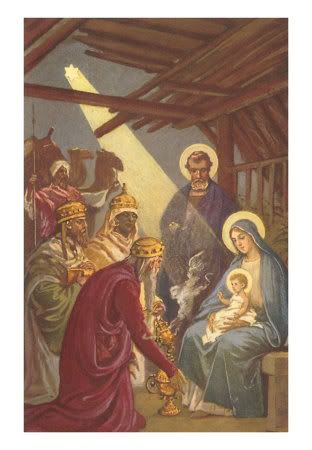
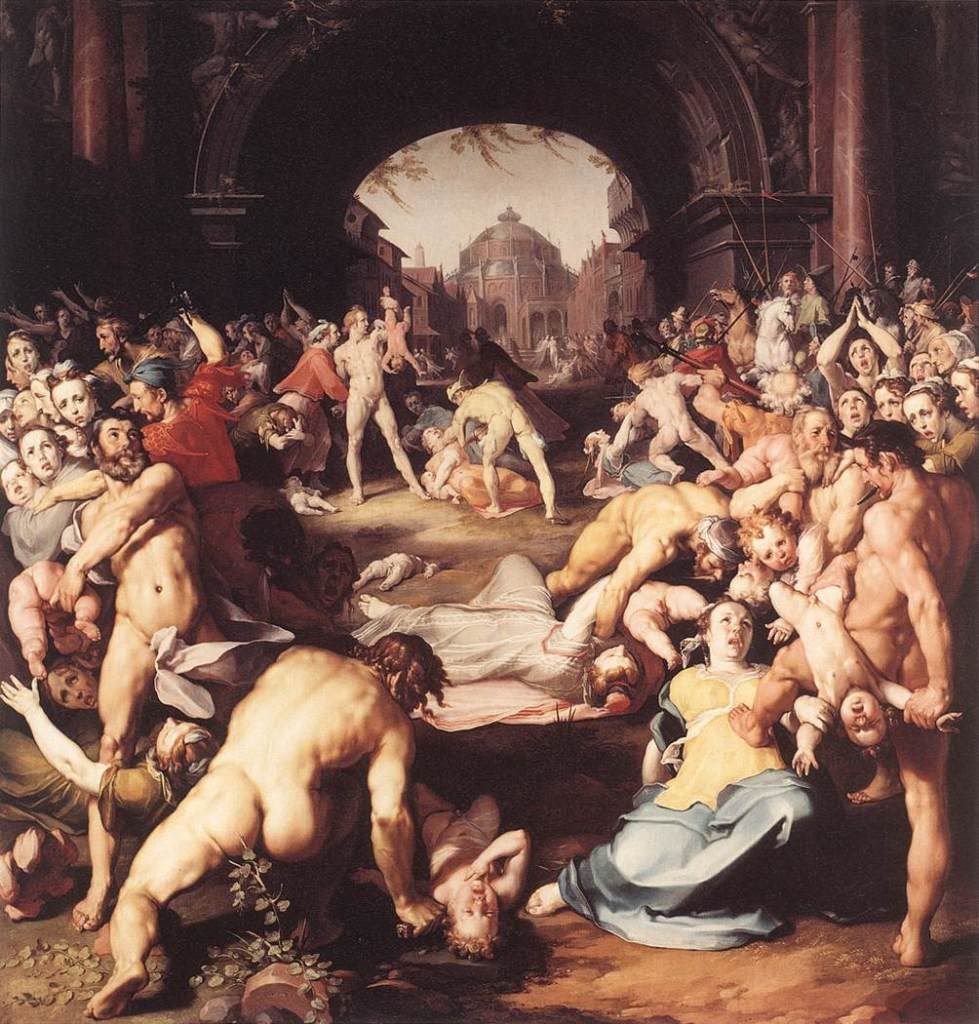
Even without reading the Bible, we all have an idea on how and where Jesus was born, from what we have seen on the TV or taught at school. We learned that Mary and Joseph had to travel to Bethlehem due to a consensus order by the Romans, they could not find any place to stay so they found refuge in a stable, where Jesus was born. A shining star guided the 3 Wise Men to the place of birth, where angels and shepherds had gathered, while King Herod learning that a future king was born ordered the slaughter of every male child up to the age of 2.


Let’s read though, how Matthew, Mark, Luke and John describe the birth of Jesus in the New Testament:


Well, Mark and John actually say nothing on the subject. They make no mention on the birth. Only Matthew and Luke describe it, however with conflicting information.


Matthew
2:1 Now when Jesus was born in Bethlehem of Judaea in the days of Herod the king, behold, there came wise men from the east to Jerusalem,

2:2 Saying, Where is he that is born King of the Jews? for we have seen his star in the east, and are come to worship him.

2:3 When Herod the king had heard these things, he was troubled, and all Jerusalem with him.

2:4 And when he had gathered all the chief priests and scribes of the people together, he demanded of them where Christ should be born.

2:5 And they said unto him, In Bethlehem of Judaea: for thus it is written by the prophet,

2:6 And thou Bethlehem, in the land of Juda, art not the least among the princes of Juda: for out of thee shall come a Governor, that shall rule my people Israel.

2:7 Then Herod, when he had privily called the wise men, enquired of them diligently what time the star appeared.

2:8 And he sent them to Bethlehem, and said, Go and search diligently for the young child; and when ye have found him, bring me word again, that I may come and worship him also.

2:9 When they had heard the king, they departed; and, lo, the star, which they saw in the east, went before them, till it came and stood over where the young child was.

2:10 When they saw the star, they rejoiced with exceeding great joy.

2:11 And when they were come into the house, they saw the young child with Mary his mother, and fell down, and worshipped him: and when they had opened their treasures, they presented unto him gifts; gold, and frankincense and myrrh.

2:12 And being warned of God in a dream that they should not return to Herod, they departed into their own country another way.

2:13 And when they were departed, behold, the angel of the Lord appeareth to Joseph in a dream, saying, Arise, and take the young child and his mother, and flee into Egypt, and be thou there until I bring thee word: for Herod will seek the young child to destroy him.

2:14 When he arose, he took the young child and his mother by night, and departed into Egypt:

2:15 And was there until the death of Herod: that it might be fulfilled which was spoken of the Lord by the prophet, saying, Out of Egypt have I called my son.

2:16 Then Herod, when he saw that he was mocked of the wise men, was exceeding wroth, and sent forth, and slew all the children that were in Bethlehem, and in all the coasts thereof, from two years old and under, according to the time which he had diligently enquired of the wise men.


Let’s see what Luke says on the subject:

Luke
2:1 And it came to pass in those days, that there went out a decree from Caesar Augustus that all the world should be taxed.

2:2 (And this taxing was first made when Cyrenius was governor of Syria.)

2:3 And all went to be taxed, every one into his own city.

2:4 And Joseph also went up from Galilee, out of the city of Nazareth, into Judaea, unto the city of David, which is called Bethlehem; (because he was of the house and lineage of David:)

2:5 To be taxed with Mary his espoused wife, being great with child.

2:6 And so it was, that, while they were there, the days were accomplished that she should be delivered.

2:7 And she brought forth her firstborn son, and wrapped him in swaddling clothes, and laid him in a manger; because there was no room for them in the inn.

2:8 And there were in the same country shepherds abiding in the field, keeping watch over their flock by night.

2:9 And, lo, the angel of the Lord came upon them, and the glory of the Lord shone round about them: and they were sore afraid.

2:10 And the angel said unto them, Fear not: for, behold, I bring you good tidings of great joy, which shall be to all people.

2:11 For unto you is born this day in the city of David a Saviour, which is Christ the Lord.

2:12 And this shall be a sign unto you; Ye shall find the babe wrapped in swaddling clothes, lying in a manger.

2:13 And suddenly there was with the angel a multitude of the heavenly host praising God, and saying,

2:14 Glory to God in the highest, and on earth peace, good will toward men.

2:15 And it came to pass, as the angels were gone away from them into heaven, the shepherds said one to another, Let us now go even unto Bethlehem, and see this thing which is come to pass, which the Lord hath made known unto us.

2:16 And they came with haste, and found Mary, and Joseph, and the babe lying in a manger.

2:17 And when they had seen it, they made known abroad the saying which was told them concerning this child.

2:18 And all they that heard it wondered at those things which were told them by the shepherds.

2:19 But Mary kept all these things, and pondered them in her heart.

2:20 And the shepherds returned, glorifying and praising God for all the things that they had heard and seen, as it was told unto them.

2:21 And when eight days were accomplished for the circumcising of the child, his name was called JESUS, which was so named of the angel before he was conceived in the womb.

2:22 And when the days of her purification according to the law of Moses were accomplished, they brought him to Jerusalem, to present him to the Lord;
.
.
.
2:39 And when they had performed all things according to the law of the Lord, they returned into Galilee, to their own city Nazareth.

2:40 And the child grew, and waxed strong in spirit, filled with wisdom: and the grace of God was upon him.

2:41 Now his parents went to Jerusalem every year at the feast of the passover.

2:42 And when he was twelve years old, they went up to Jerusalem after the custom of the feast.


I apologise for the long sections of the Gospels mentioned above, however it is important to give those of you without a New Testament in hand the opportunity to read what is written in the relevant sections.


Historically, it is impossible for both versions of those events to have taken place at the same time, even though that’s what we have been taught for years.


Luke places the birth of Jesus around the time when Cyrenious was governor of Syria. This was around 6-7 AD and an account of the census was given by the first century historian Josephus.


However, it would have been impossible for Herod to have been alive at that time, since he passed away in 4 BC. For those of you who doubt the date of Herod’s death, you can read the following


  • Ormond Edwards, “Herodian Chronology,” Palestine Exploration Quarterly 114 (1982) 29-42


  • W.E. Filmer, “Chronology of the Reign of Herod the Great,” Journal of Theological Studies ns 17 (1966) 283-298


  • Paul Keresztes, Imperial Rome and the Christians: From Herod the Great to About 200 A.D. (Lanham, MD: University Press of America, 1989) 1-43


  • P. M. Bernegger, “Affirmation of Herod’s Death in 4 B.C.,” Journal of Theological Studies ns 34 (1983), 526-31


Furthermore, the list of all governors under Herod is known, and no Cyrenious is mentioned, in case you thought Cyrenious’ governship may have been earlier than 6AD.


Another conflicting information is that, although there were indeed a number of censuses instructed by Caesar Augustus, none of them took place around the time of the birth of Jesus. Caesar Augustus reigned as emperor of the Roman Empire from 27 B.C. to 14 A.D. He authorized three censuses during this reign. How do we know this? The three censuses are listed in the Acts of Augustus, a list of what Augustus thought were the 35 greatest achievements of his reign. He was so proud of the censuses that he ranked them eighth on the list. The Acts of Augustus were placed on two bronze plaques outside of Augustus's mausoleum after he died.


The three empire-wide censuses were in 28 B.C., 8 B.C., and 14 A.D.


So, it is impossible for the events described in Matthew to have happened at the same time as the events described in Luke, since the events in Matthew happened when Herod was alive, while the events described in Luke happened 10 years later.


This is, then, where the problem starts. Which of the two stories is true? Matthew places the birth of Jesus during the reign of Herod, but makes no mention of a birth in a stable, or of angels and shepherds. In fact, Matthew indicates that the family of Jesus lived in Bethlehem, since the wise men visited the baby in its home and that they moved to Egypt to avoid Herod’s men.


On the other hand, Luke places the birth 10 years later, but makes no mention of any order to kill babies. In fact, he clearly states that Jesus and his family stayed in Nazareth until Jesus reached 12 years of age.


We cannot say that the true story is that taught to us (i.e. an amalgamation of both versions), since two wrongs do not make a right. We cannot accept the events described in both as true, and then reject the historical dates as wrong simply because they do not suit our story. Either one of the stories is right or both have errors, since both cannot be right.


I will let you decide what you make of it. It is worrying, from a religious perspective, to have such conflicting information in the book which is considered the holy one of the Christian religion. It is even more worrying that such conflicts exist in other parts of the book, which relate to even more important beliefs. I will refer to these parts in future blogs.

31 March 2010

Να αμαρτησω λιγο ακομα; (αληθινη ιστορια)

Οσοι απο εσας με ξερουν προσωπικα ξερουν οτι δεν ειμαι θρησκος καθολου. Για μενα, η θρησκεια ειναι το διαφημιστικο κομματι μιας εταιρειας που ονομαζεται ‘εκκλησια’, η οποια βγαζει τεραστια κερδη με το να ικανοποιει την αναγκη των ανθρωπων για ‘πιστη’ με το να τους πουλαει ενα αντικειμενο που το ονομαζει ‘Θεο’. Αντικαταστηστε ‘πεινα’ με τη λεξη ‘πιστη’, ‘φαγητο’ με ‘Θεο’, ‘διαφημιση’ με ‘θρησκεια’ και εχετε το μεγαλυτερο καταστημα Μακ Ντοναλντς με το ονομα ‘εκκλησια’.


Πριν τρια χρονια, μερικες μερες πριν το Πασχα, με σταματησε καποιος στο δρομο την ωρα που επεστρεφα σπιτι. Με ρωτησε εαν θα ηθελα να δω τζαμπα την ταινια του Μελ Γκιμπσον ‘Τα Παθη Του Χριστου’. Μην ανησυχειτε. Δεν ηταν ντυμενος σαν Καθολικος παπας και ουτε εγω ημουν πιτσιρικας. Ηξερα οτι στη γωνια της γειτονιας μου υπηρχε μια εκκλησια Μεθοδιστων. Ειχαν οργανωσει μια δωρεαν προβολη της ταινιας, μια που το Πασχα ηταν κοντα, για οποιον ηθελε να παει να την δει.


Δεν ειχα προγραμματισει τιποτα για την επομενη μερα και δεν με χαλαγε να δω ταινια τζαμπα. Δεχτηκα την προσκληση.


Το επομενο βραδυ εφτασε και μπηκα στην εκκλησια. Δεν ειχα μπει ποτε πριν σε εκκλησια Μεθοδιστων και με εκπληξη ειδα οτι απο μεσα εμοιαζε με σχολικη ταξη, με ενα μικρο βωμο στη δεξια γωνια, οπου ενα γραφειο με ενα σταυρο πανω του και μερικες φωτογραφιες του Ιησου στον τοιχο σε εκανε να καταλαβεις οτι αυτο ηταν ενα μερος για προσευχη. Βλεπετε, η εμπειρια που ειχα μεχρι εκεινη τη στιγμη απο την Χριστιανικη θρησκεια ηταν απο εκκλησιες Ορθοδοξες και Καθολικες, στις οποιες το εσωτερικο συναγωνιζεται για το μεγαλυτερο, βαρυτερο, ακριβωτερο ντεκορ στον πλανητη (αν οχι τον ιδιο τον παραδεισο).


Καρεκλες ειχαν τοποθετηθει σε σειρες σε ολοκληρο το δωματιο και αποφασισα να καθησω στην μπροστινη σειρα προς τα δεξια. Πρεπει να ηταν μια υποσυνειδητη αποφαση μια και μου αρεσει να καθομαι μπροστα μπροστα οταν παω στο σινεμα να δω ταινια. Ευτυχως που υποσυνειδητα δεν πειρα μαζι μου γλυκο ποπ κορν και κοκα κολα. Κοιταζωντας γυρω μου ειδα αλλα 30-35 ατομα στο δωματιο. Μερικα ηταν φανερο οτι ηταν πιστα, θεοφοβουμενα, αλλα απλα κοιτουσαν με περιεργια και κανα δυο ηταν τζαμπατζηδες σαν και μενα που ηρθαν να δουν δωρεαν ταινια.


Δεν μπορω να πω οτι ενοιωσα ενοχες που μπηκα σε χωρο προσευχης μονο και μονο για να δω τζαμπα ταινια. Εγω και ο Θεος, αν υπαρχει, εχουμε μια αμοιβαια κατανοηση μεταξυ μας, σαν ενας γαμπρος και μια πεθερα. Μενω μακρια απο τα ποδια του και εκεινος δεν ασχολειται με μενα, εκτος απο μερικες περιπτωσεις που επισκεπτομαι εκκλησια για λογους καθαρα εθιμοτυπικους, η οταν καποιος σε μια πλατεια μου κολλαει στη μουρη μια πινακιδα που λεει 'Μετανοειτε Τωρα'. Μαλιστα, φαινεται οτι απο μικρος ημουν αλεργικος στις εκκλησιες! Θυμαμαι στο σχολειο που οι δασκαλοι μας πηγαινανε εκκλησια μια φορα το μηνα και εγω ζαλιζομουνα μεσα σε λιγα λεπτα απο την ωρα που αρχιζε η λειτουργεια. Οι δασκαλοι μου νομιζαν οτι εκανα ψεματα οτι μου ερχοταν λυποθημια μεχρι που μια μερα κοντεψα να κανω εμετο μεσα στην εκκλησια. Τελικα, αργοτερα, εμαθα οτι το σωμα μου δεν σηκωνει τη μυρωδια του λιβανιου.


Τελος παντων. Η ταινια αρχισε και για να ειμαι ειλικρινης μου αρεσε, εστω και αν ανακατεψε και μπερδεψε μερικα πραγματα στην ιστορια, οπως εχει κανει αλλωστε και η εκκλησια με τη Βιβλο (αλλα αυτο ειναι ενα θεμα που θα γραψω σε αλλο κειμενο στο μελλον). Και ενω η ταινια ειχε φτασει στο αποκορυφωμα της, με τον Ιησου να ψυθιριζει τα τελευταια του λογια στο σταυρο, ξαφνικα σταματησε. Τα φωτα αναψανε και ενας ξανθος 40αρης, με τζην και μπλουζακι, μικροφωνο στο χερι, αναπηδαει μπροστα μας και φωναζει 'Αδερφια, γεια ποιο λογο θυσιαστηκε ο Ιησους;'


Κατι μου λεει οτι γερναω. Δεν υπαρχει λογος να το αρνουμαι. Αλλιως δεν εξηγηται πως δεν ετρεξα στην εξοδο και στη βροχη και το κρυο μεχρι να πει ο αλλος 'Αδερφια'. Εχασα την ευκαιρια και μεχρι να γυρισω να δω την εξοδο οι αλλοι δυο τζαμπατζηδες την ειχαν ηδη κανει, τρεχοντας εξω, στην ελευθερια, λιγο πριν κλεισουν την πορτα δυο τυποι που σταθηκαν μπροστα της σαν πορτιερηδες σε VIP κλαμπ. Ημουν παγιδευμενος!


Αφου δεν υπηρχε τροπος αποδρασης, επρεπε να κανω ο,τι κανει καθε εξυπνος φυλακισμενος για να παραμεινει ζωντανος και με ισιο μυαλο στη φυλακη. Οχι ρε, δεν εννοω οτι εγινα η γκομενα καποιου!!! Μιλαω για τακτικη. Τροπους να κανεις το φυλακα, συγγνωμη, εννοω τον παπα, να ερθει στα νερα σου και να σε αφησει να φυγεις αλαβωτος. Ετσι, εκατσα στην καρεκλα μου, σφυγμενος και χωρις να κανω θορυβο, ακουγωντας τον παπα και σχεδιαζοντας την επομενη μου κινηση.


'Ειμαστε ολοι αμαρτωλοι!' φωναζε στο μικροφωνο. Κριμα που δεν ηταν μαυρος γιατι τοτε θα ηταν σαν αυτες τις ταινιες που εχω δει, με ενα μαυρο παπα να βγαινει στο βωμο, φωναζοντας και ουρλιαζοντας για σωτηρια, κανωντας τον Τζειμς Μπραουν μεχρι ο υπολοιπος κοσμος να τον ακολουθησει, με τα χερια ψηλα, να τα κουνανε δεξια και αριστερα. Αλλα αυτος εδω εμοιαζε πιο πολυ με εργαζομενο σε τηλεφωνικο κεντρο, που υποδυεται οτι ειναι μαυρος και Τζειμς Μπραουν, σαν να ηταν σε μπαρ με καραοκε.


Αλλα μια και ο Θεος ενεργει μυστηρια, το κοινο εριχνε που και που τα κλασσικα 'Ναι', 'Αμην', 'Ευλογητος ο Κυριος' προς το μερος του παπα αλλα και προς το ταβανι. Φαινεται οτι το καραοκε του ειχε την καταληλη επιδραση στο κοινο.


'Ειστε ετοιμοι να ζητησετε συγχωρηση για τις αμαρτιες σας;', ρωτουσε.


'Ναι!', απαντουσαν ολοι, εκτος απο εναν Ελληνα στην πρωτη σειρα.


'Ειστε ετοιμοι να σωθητε και να περπατησετε με το Θεο, τον Κυριο μας, τον Ιησου Χριστο;', ουρλιαζε.


'Ναι', φωναζαν κι αυτοι, εκτος απο εναν μουγγο Ελληνα στην πρωτη σειρα.


'Τοτε ελατε εδω, γονατηστε και προσευχηθητε στον Ιησου για συγχωρεση', ειπε.


Και αμεσως, ο ενας μετα τον αλλο, πηγαν. Βηματησαν μπροστα, γονατισαν στο πατωμα και προσευχηθηκαν. Ακουμπουσε τα μετωπα τους, ελεγε κατι που εμοιαζε με προσευχη σε γρηγορη ταχυτητα και αυτοι ευχαριστουσαν το Θεο, δοξολογουσαν το Θεο, εσκηβαν και προσευχωνταν και μιλουσαν με τις δικες τους προσευχες.


Ηταν ωρα να βαλω σε λειτουργεια τα σχεδια μου γιατι η κατασταση ηταν πλεον εκτος ελεγχου. Ωρα για τη 'Στρουθοκαμηλος', μια τακτικη που μαθαμε ολοι μας στο σχολειο. Οταν ο δασκαλος ρωταει ολη την ταξη κατι και δεν ξερουμε την απαντηση, σκυβουμε τας κεφαλας μας, κοιταμε κατω και προσευχομαστε να μην διαλεξει εμας. Βεβαια το οτι καθομουν στην μπροστινη σειρα ηταν ενα μειονεκτημα, μια και δεν ηταν δυσκολο να με διαλεξει αναμεσα στους 8 που καθωνταν κατω ακομα. Αλλα ακολουθησα την τακτικη κατα γραμμα. Κατω το κεφαλι, με ματια να κοιτανε τα παπουτσια μου (Σημειωση: την επομενη φορα που πας να δεις ταινια σε εκκλησια να φορας αθλητικα παπουτσια για τρεξιμο), χερια σφηκτα σαν να κανω προσευχη. Ας ελπισουμε οτι νομιζει οτι προσευχομαι και με αφησει στην ησυχια μου.


Αλλα μιλησα γρηγορα. Δεν ηταν μονος του. Ξαφνικα, καποιος καθησε διπλα μου. Δεν ηταν απο το κοινο, δουλευε για την εκκλησια.


'Εισαι ετοιμος να ζητησεις αφεση των αμαρτιων σου, αδελφε;', με ρωτησε.


Η περιπτωση αυτη ηθελε αλλαγη σχεδιου, σκεφτικα. Απο δω και περα θα ηταν ενα παιχνιδι θρησκευτικου σκακιου μεταξυ δυο μεγαλων μαστερ, οποτε επρεπε να σχεδιασω καθε μου κινηση προσεκτικα. Αν εκανα επιθεση με ενα ΄'Αει γαμησου', θα με αντιμετωπιζε με μια αμυνα 'Ο Σατανας Στις Ζωες Μας', που θα με αφηνε ανοιχτο σε επιθεσεις απο τα πλαγια, ενα πιθανο ματ σε 5 κινησεις.


Οχι, το παιχνιδι ηθελε λογικες επιθεσεις οπως αυτες ενος πραγματικου Κασπαροφ. Ετσι, ξεκινησα με μια κινηση 'Στην Ιδια Ομαδα' για να δοκιμασω τις ικανοτητες του.


'Ειμαι κι εγω Χριστιανος οπως εσυ αλλα στην Ορθοδοξη εκκλησια εχουμε αλλους τροπους για να ζητησουμε συγχωρεση', απαντησα.


'Μπορεις να σωθεις αποψε', ειπε. Μαλιστα. Η κινηση 'Αγνοια'. Ηταν καλος, αγνοωντας την δοκιμαστικη μου επιθεση και περιμενωντας για αλλη επιθετικη κινηση για να δοκιμασει τη δυναμη μου. Ενταξει μεγαλε, για να δουμε ποσο καλος εισαι. Και συνεχισα με μια κινηση 'Μην Αμφιβαλεις Την Πιστη Μου'.


'Οι Ορθοδοξοι Χριστιανοι πιστευουν οτι δεν χρειαζεσαι εναν παπα για αφεση αμαρτιων, μπορεις απλα να προσευχηθεις στο Θεο για αφεση'. Οριστε κυριε, πια ειναι η απαντηση σου σε αυτη την κινηση;


Σταματησε για λιγο να σκεφτει τα λογια μου.


'Γιατι να χασεις πολυτιμο χρονο για να ζητησεις αφεση αμαρτιων; Δεν ξερουμε ποτε τι φερνει η επομενη μερα, οποτε ειναι καλυτερα να ειμαστε προετοιμασμενοι, αδερφε.'


Μαλιστα. Ακομα δεν τσιμπησε το δολωμα οποτε χρειαζοταν να δημιουργησω εναν αντιπερισπασμο και να τον χτυπησω δυνατα οταν δεν κοιταει (μιλαω μεταφορικα, βεβαια). Ας περασει ο 'Σωκρατης'. Η αγαπημενη μου τακτικη, αργη, υπομονετικη και η οποια στρεφει την ιδια τη δυναμη σου εναντιων σου, σαν το Ζιου Ζιτσου.


'Πιστευεις στο Θεο;', τον ρωτησα.


'Φυσικα και πιστευω', απαντησε.


'Πιστευεις οτι δεν πρεπει ποτε να λεμε ψεματα; Οτι ειναι αμαρτια να λεμε ψεματα;'


'Βεβαιως, αδερφε'


'Εσυ εισαι αμαρτωλος;'


'Ολοι μας ειμαστε. Γι αυτο και ειναι απαραιτητο να σωθουμε τωρα με το να ζητησουμε αφεση αμαρτιων, μια και δεν ξερουμε τι θα φερει η επομενη μερα.', ειπε.


'Κι εγω αμαρτωλος ειμαι. Οπως ολοι. Αλλα δεν ειμαι ακομα ετοιμος να ζητησω αφεση', δηλωσα.


'Γιατι οχι; Δεν φοβασε μην τυχων σου συμβει κατι και τοτε θα ειναι αργα;'


Ετσι! Τσιμπησε το δολωμα, αφησε την αμυνα του ορθανοιχτη νομιζοντας οτι δεν εκανα επιθεση και τωρα ηταν ωρα να αρχησω να του περνω τα πιονια ενα ενα.


'Αν σου ελεγα οτι ειμαι ετοιμος θα σου ελεγα ψεματα, αδελφε. Και το να λες ψεματα ειναι αλλη μια αμαρτια. Αυτο σημαινει οτι αν δεχομουν την προσκληση σου, θα αμαρουσα και παλι με το να πω ψεματα'. Παει ο αξιωματικος.


'Μα δεν φοβασαι που δεν θα λαβεις αφεση αμαρτιων;'. Επαναληψη των προηγουμενων λεξεων του. Ειχε βραχικυκλωσει και δεν ηξερε τι κινηση να κανει.


'Θελω να ζητησω αφεση οταν θα ειμαι ετοιμος. Οταν θα ξερω οτι δεν θα ξανακανω μετα κατι κακο. Αυτη τη στιγμη δεν ειμαι ετοιμος'.


'Μα γιατι οχι;'


'Επειδη ξερω οτι παλι θα κανω αμαρτιες. Αρα δεν υπαρχει λογος να ζητησω αφεση εφοσον προκειται να ξανααμαρτησω μετα απο λιγο, ειτε με το να πω ξεματα σε καποιον, ειτε με το να βλαστημησω καποιον, η με το να κοιμηθω με καποια γυναικα χωρις να ειμαι παντρεμενος.'. Παει και ο στρατιωτης.


'Μπορεις να ζητησεις αφεση και για αυτες τις αμαρτιες'. Λαθος ερασιτεχνη.


'Αν μετανοησω τωρα, ξερωντας πολυ καλα οτι αυριο θα αμαρτησω ξανα, η μετανοια μου δεν θα ειναι αληθινη αλλα ψευτικη. Αρα, θα εχω πει ψεματα , το οποιο ειναι αμαρτια. Αν πω σε σενα ναι, θελω να μετανοησω, θα λεω ψεματα. Αλλη μια αμαρτια. Οπως και να το δεις, εαν κανω κατι τωρα, αυτη τη στιγμη, θα καταληξει σε μια αμαρτια, σε πιο πολλες αμαρτιες απο οσες εχω ηδη. Δεν ειμαι λοιπον προετοιμασμενος για κατι τετοιο. Οταν ειμαι, θα μιλησω κατευθειαν σε αυτον εκει ψηλα'. Παει και το αλογο. Ρουα!


Στην αρχη δεν ειπε τιποτα. Περιμενα και περιμενα. Καμμια απαντηση. Δυσκολευοταν. Τον εχω στο χερι μου το βασιλια σου! Αλλα ξαφνικα, μια παρανομη κινηση!!!! Σηκωθηκε και τη θεση του πηρε ο ιδιος ο παπας!!! Για μια στιγμη! Απαγορευεται να αλλαξεις αντιπαλο στη μεση του παιχνιδιου! Αυτο ειναι απολυτα και ιερα αδικο! Που ειναι η βροντη και η αστραπη που περιμενα; Ο σεισμος; Τι ηταν αυτο! Οι εκπροσωποι του Παντοδυναμου ειναι υπερανω κανονισμων; Ελα ρε!!!


Αφου ηρθαν ετσι τα πραγματα, χωρις να χαθει λεπτο ειχαμε μια παρομοια συζητηση με την προηγουμενη. Γιατι δεν ηθελα να μετανοησω. Επειδη δεν ημουν ετοιμος, επειδη ηθελα να αμαρτησω για λιγο ακομα και επειδη ακομα κι αν ημουν ετοιμος θα το εκανα χωρις μεσαζοντες για να εξασφαλισω ενα πληρη εξειδικευμενο 'Συγχωρεμενος'.


Προς εκπληξη μου, δεχτηκε την εξηγηση μου. Δεν με πιεσε προς υποταγη. Δεν ζητησε απο τους αγγελους να με δεσουν και να με υποχρεωσουν να διαβασω προσευχες απο τη Βιβλο. Οχι μονο αυτο αλλα με καλεσε κιολας να μεινω για καφε και μπισκοτα που θα σερβιρονταν αργοτερα. (Χμ, θα σας υπενθυμησω και παλι οτι δεν ημουν 6 χρονων αλλα κοτζαμ αντρας, οποτε να σταματησετε να κανετε αυτες τις χυδαιες σκεψεις γιατι αμαρτωλειτε!!!). Απλα, χρησιμοποιησε την κινηση 'Διαιρω Και Υποτασσω'. Καλεσε τον για καφε, μιληστε για θρησκευτικα θεματα, κανε τον να αναθεωρησει την αποψη του για την Ορθοδοξια, κανε τον να εχει αμφιβολιες για την ιδια του την πιστη και τοτε φερε τον στη δικη σου παραταξη.


Αυτο που δεν ηξερε ηταν οτι εγω χρησιμοποιουσα την τακτικη 'Αινσταιν', μια δυσκολη τακτικη ως προς την εκτελεση αλλα πολυ αποτελεσματικη οταν αμυνεσαι. Η τακτικη, σε γενικες γραμμες, βασιζεται στην εξησωση E=mc2. Το Ε ειναι η Αποδραση (Escape στα αγγγλικα). Το c ειναι η κουβεντα για εκκλησιαστικα θεματα (Church talk στα αγγλικα). Το m ειναι ο αρσενικος (Male στα αγγλικα). Οποτε, Αποδραση = αρσενικος επι εκκλησιαστικη κουβεντα εις το τετραγωνο, που πολυ απλα συμαινει οτι οσο πιο πολλοι αρσενικοι μιλανε για θεματα εκκλησιας τοσο πιο πολλες πιθανοτητες να δραπετευσω ειχα. Κια μια που εκανα δηθεν οτι ειμουν πιστος, το μονο που επρεπε να κανω ηταν να προσποιηθω οτι πιστευω, να ξεκινησω μια βαθεια κουβεντα σχετικα με τη θρησκεια και απο κει και περα να αφησω την επιστημη να αναλαβει και να με σωσει.


Ο καφες σερβιριστηκε, ακολουθησαν σπιτικα μπισκοτα και αρχισε να μου μιλαει για το πως μια μερα συναντησε το Θεο και απο τοτε ακολουθησε το δρομο του Θεου. Προσωπικα χαιρομαι για οποιον λεει κατι τετοιο, μια και φαινονται χαρουμενοι και ικανοποιημενοι με το μονοπατι τους. Εγω, απο την αλλη, ειμαι επισης χαρουμενος με το δικο μου μονοπατι και εφοσον  τα μονοπατια μας ειναι παραλληλα δεν εχω κανενα απολυτως προβλημα. Το προβλημα το εχω εαν το μονοπατι σου παει να περασει απο το δικο μου, οποτε τοτε θα σου πω ενα 'Γεια σου γειτονα' αλλα δεν θα σε αφησω να μου κανεις κυρηγμα για το ποσο καλυτερο ειναι το μονοπατι σου απο το δικο μου. Αυτο λεγεται υποκειμενικη γνωμη.


Μετα την ομιλια του για το μονοπατι του προς τη σωτηρια, αρχησαμε μια πιο ενδιαφερουσα συζητηση σχετικα με τη Βιβλο και το λογο του Θεου. Αυτο το θεμα ηταν οντως ενδιαφερον μια και εχω διαβασει ολη την Καινη Διαθηκη. Αλλωστε, δεν μπορω να πω οτι δεν πιστευω σε κατι εαν δεν εχω πρωτα διαβασει την αντιπαλη αποψη. Για να μην πολυλογω, καταλαβε οτι ημουν καλα πληροφορημενος στα θεματα της Βιβλου, ικανοποιηθηκε οτι πιστευω στο Θεο αλλα ειχα το δικο μου τροπο στο να αντιμετοπιζω τη σωτηρια (ειναι ξεκαθαρο οτι η επικοινωνια του με το Θεο πρεπει να ειχε προβλημα εκεινο το βραδυ, μια που πιστεψε οτι ημουν θρησκος, ενω εγω δεν ειμαι) και με καλεσε να παρεβρεθω στην κοινωνια την Κυριακη το πρωι.


Η απαντηση μου στην προσκληση αυτη, πριν πω τα αντιο μου, ηταν η παλια, αγαπημενη κινηση 'Διπλωματια', αγαπημενη και τελειοποιημενη απο ολες τις γυναικες του πλανητη, που τη χρησιμοποιουν οταν δεν θελουν να σε απογοητευσουν.


'Ισως', ειπα και εφυγα.


Δεν ξαναπατησα στο μερος εκεινο, οχι επειδη ειχα μια τετοια εμπειρια αλλα επειδη μπαινω σε εκκλησια μονο για λογους εθυμοτυπικους η για να θαυμασω την αρχιτεκτονικη και την εσωτερικη διαταξη. Ποτε για να επικοινωνησω με το Θεο. Αλλωστε, ο Θεος δεν ειχε καμμια εκκλησια να διδασκει, το εκανε σε ερημους, σε βουνα, σε σπηλιες και δρομους. Δωρεαν, χωρις καμμια υποχρεωση να 'προσφερετε ο,τι επιθιμειτε'., 'αγοραστε το βιβλιο, CD, DVD' η να 'κανετε μια δωρεα'. Αν λοιπον καποτε αρχισω να πιστευω, θα κρατησω την επικοινωνια μου μεταξυ εμενα και του Ιδιου, χωρις κανενα αλλον. Μεχρι να ερθει αυτη η ωρα, νομιζω οτι θα αμαρτησω για λιγο ακομα.